 NEWS
NEWSMenopause Health Engineering aims to bring together experts from diverse fields to tackle challenges in predicting and preventing health risks of menopause. Now, new contributions from Michael J. and Kristin Miljus Kelly will support graduate students and postdoctoral researchers working on these projects! Check out the Cornell Chronicle article here.
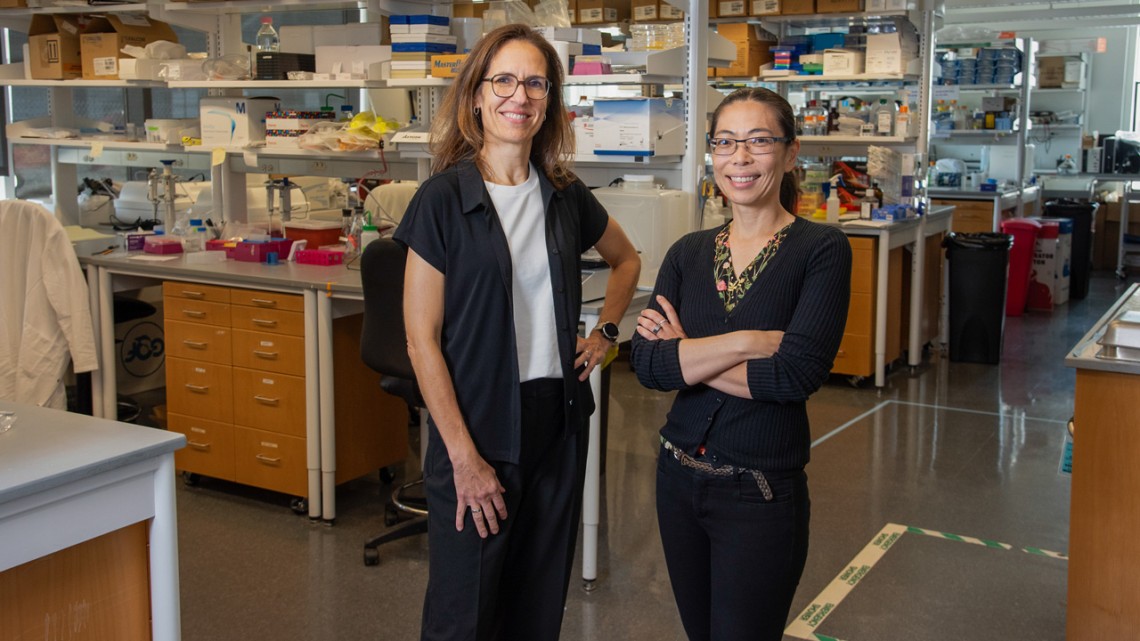
The Menopause Health Engineering Initiative, founded by Prof. Nozomi Nishimura, aims to understand the science of menopause and improve health for half the population! Check out the Cornell Chronicle article here.
Postdoc Becka Irwin has just accepted a position as a Tenure-Track Assistant Professor in the Biomedical Engineering department at the University of Rochester, to begin July 2025. Congratulations Becka!
Check out Becka's UR faculty page here.
Through a new collaboration on VR technology with the Sarvestani lab, the Schaffer-Nishimura lab marks its 7th Neurotech project funded through the Mong Fellows program in the past 9 years, beginning with the inaugural fellowship in 2016. Congratulations to all!

The project, led by SN-lab alumnus Seth Lieberman, developed a surgical technique to attenuate the spread of epileptic seizures in the brain by making precise incisions with femtosecond laser pulses around epileptic foci. Check out the Cornell Chronicle article here!
 BLOG
BLOGNozomi speaks on The Academic Minute about her new Menopause Health Engineering Initiative!
The McClintock Letters program, organized by Cornell's ASAP (and advised by Chris Schaffer), is being officially recognized by Research Amer!ca for being a "clear voice" for public health communication in a time when it's desperately needed.
Read more about the McClintock Letters here.

MouseGoggles, the cutesy VR headset developed by Matt Isaacson and Hongyu Chang in the Schaffer-Nishimura and Ellwood Labs, has made its way to the Late Show with Stephen Colbert.
Move over Nature - being a 15-second gag on late night TV is the real scientific achievement.
Cornell's new Broadening Experiences in Scientific Training (BEST) program, funded by the National Institutes of Health, was profiled in Science Careers. One track in Cornell's BEST program focuses on science policy and is led by Chris Schaffer.
A blog post on the AAAS Member Central website describes the goals of Chris Schaffer's new science policy course, BME 4440 Science Policy Bootcamp: From Concept to Conclusion. This course is being offered for the first time this Fall, with an enrollment of about 20 undergraduate and graduate student scientists.